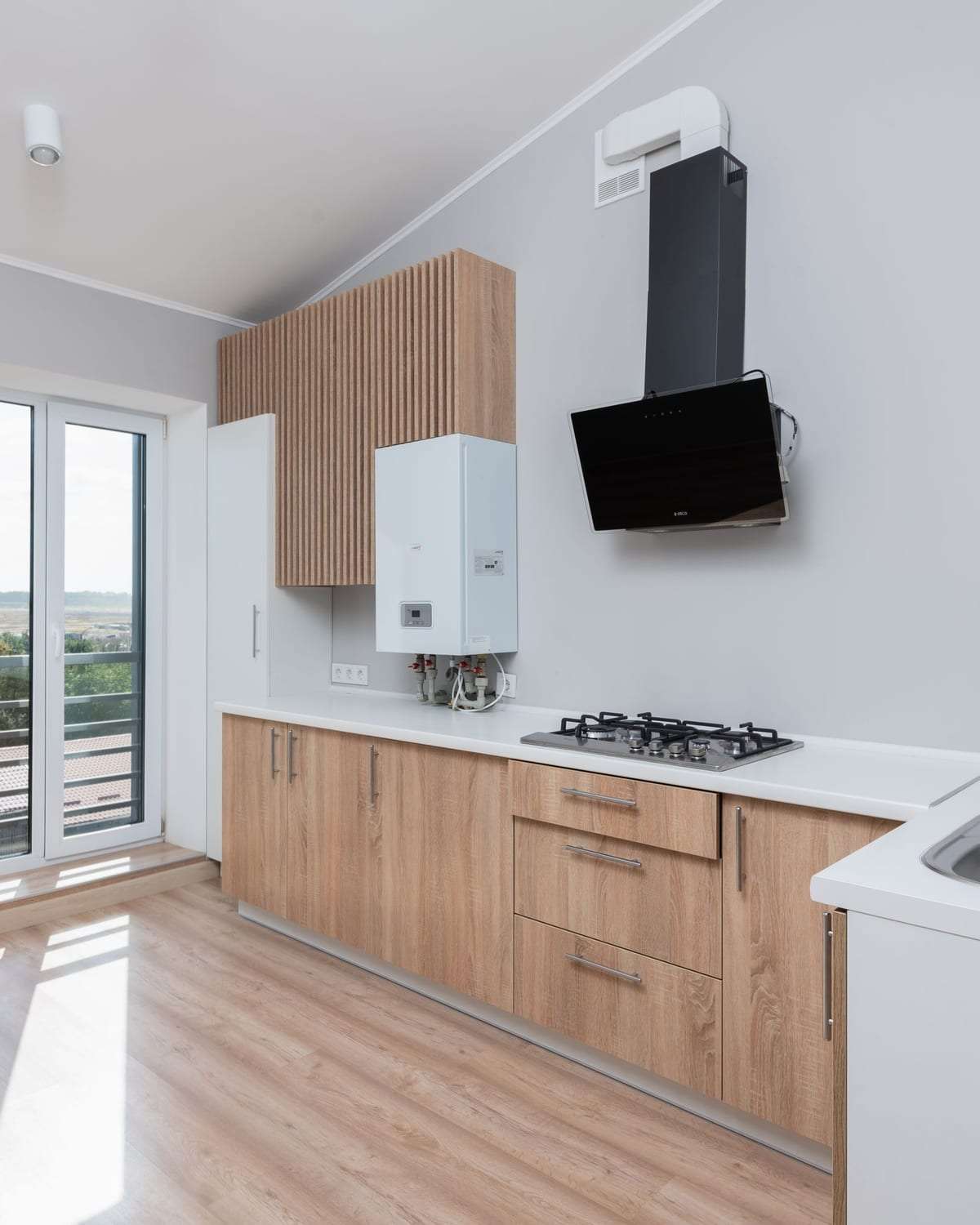
First: move the kitchen or leave it?
Before asking for the kitchen to be removed, measure the new kitchen: wall lengths, the position of water, drainage and power points, the window, and the ceiling height. A kitchen designed for a four-metre wall may not fit a three-metre one, and an L-shaped kitchen may not suit a straight one. It may need cutting, adjusting or extra units.
Then compare: is the cost of removal, transport, adjustment and installation reasonable compared with a new kitchen that fits? Is the kitchen in a state to survive being taken apart again? Some older wooden kitchens are damaged by removal, and marble and granite tops can crack. Sometimes it’s better to sell the old kitchen, or leave it to the landlord by agreement, and install a new one.
Kitchen types and what each means for the move
Aluminium kitchens are common in the Kingdom and relatively easy to remove, move and reinstall, but they need an aluminium fitter who can adjust them if the measurements differ. Wooden kitchens need a carpenter, and many are made of particle board that weakens with repeated removal. Ready-made showroom kitchens come apart and go back together more like furniture.
With every type, the worktops are the hardest part: marble or granite is heavy and brittle, can crack during removal or transport, and rarely fits the new kitchen without cutting. Ask the company directly: do you move the worktops, or do you recommend new ones?
Removing and installing a kitchen: who does what?
A kitchen combines several trades: a carpenter or aluminium fitter for the cabinets, a plumber to disconnect and reconnect the sink, water and drainage, an electrician for built-in appliances and lighting, and a gas technician if the cooker runs on gas. Some moving companies provide all of these, others only the carpenter — so ask specifically.
- Who disconnects water, drainage and gas in the old home?
- Who adjusts the cabinets if the measurements differ?
- Who connects the sink and appliances in the new home?
- Are the worktops included in removal and installation?
- How many days does installation take?
Split AC units: why you need a technician
A split AC isn’t just a unit you unplug and carry. It’s two units, indoor and outdoor, joined by a copper pipe containing refrigerant. Done properly, the technician pumps the refrigerant down into the outdoor unit before disconnecting the pipes, so it isn’t lost. On reinstallation, the pipes are evacuated of air and moisture, checked for leaks, and recharged if needed.
If an AC is removed incorrectly, refrigerant can be lost or moisture can enter the circuit, so it runs in the new home but doesn’t cool as before, or the compressor fails later. So ask for a specialist technician, not a member of the carrying crew, and ask whether the offer covers refrigerant and new pipes if needed.
Window and central AC units
Window units are simpler: they come out of the wall opening and travel upright as they are. But the new home needs an opening of the right size, or you’ll need extra work to cut or reduce the opening. The old home is left with openings you need to agree with the landlord on closing.
Central and ducted units are usually part of the building and don’t normally move with the furniture. If they’re yours and you want to move them, that’s a job for a central-AC specialist, not the moving company alone.
The old home: don’t forget what you leave behind
Removing the kitchen and AC units leaves holes in walls, open pipes and exposed water and power points. Many leases require the home to be returned as it was. Agree with the landlord in advance on what’s needed, and ask the company whether closing openings and capping pipes is part of the offer or needs another tradesperson.
When to remove and when to install AC units
Especially in summer, don’t remove every AC in the old home first thing in the morning — the crew and family will spend the day in severe heat. Better to remove them at the end of the day after loading, or on a later day if the home is available. In the new home, ask for at least one room’s AC on day one so the first night is comfortable. Read the guide to moving in summer.
Fridge, washing machine and cooker
Large freestanding appliances move with the furniture but need preparation: empty and unplug the fridge the day before so it dries, move it upright if possible, and leave it a few hours before switching on in the new home if it travelled on its side. Disconnect and drain the washing machine and secure the drum if it has a transport lock. A gas cooker needs the gas safely disconnected before the move and reconnected by a qualified person.
How to describe it in your request
In the SaudiMoving request, choose “kitchen removal and installation” and “AC removal and installation” among the extras. Then tell the company when they contact you: the kitchen type and length, the worktop material, the number and type of AC units, and whether the new home has ready openings and connections. The more precise the information, the more precise the offer.
FAQ
Can my old kitchen fit a new home with different measurements?
Sometimes, with adjustment, cutting or extra units. Measure the new kitchen first and ask the fitter whether adjusting it is possible and sensible.
Does an AC lose refrigerant when moved?
Removed correctly, the refrigerant is pumped into the outdoor unit and usually isn’t lost. It may need a top-up depending on the length of the new pipes.
Do I need new copper pipes?
If the units are further apart in the new home, or the old pipes are damaged, you may need new ones. Ask the technician.
Does the moving company remove the kitchen itself?
Some have carpenters and technicians, others work with partners. Ask who will do each part.
How long does kitchen installation take?
It depends on the size and adjustments, and can take a day or more. Ask, so you can plan meals for the first days.
This guide is general information. Building rules, roads and seasons can change, and details such as the price, what the offer includes and how damage is handled are agreed with the moving company you choose — confirm them in writing before moving day.